2026 Monthly Habit Tracker KDP Interior: A Practical Tool for Building Consistent Routines
Tracking habits effectively requires more than good intentions. It calls for a system that is structured enough to guide daily action yet flexible enough to adapt to changing routines. The 2026 Monthly Habit Tracker KDP Interior offers exactly that combination. Designed as a complete, editable template set for Canva, this interior package gives creators, publishers, and individuals a ready-made framework for monitoring habits across the entire year. Whether you are producing a journal for sale on Amazon KDP or setting up a personal tracking system, this resource provides a clean, minimal foundation that can be tailored to fit almost any workflow.
What the 2026 Monthly Habit Tracker KDP Interior Includes
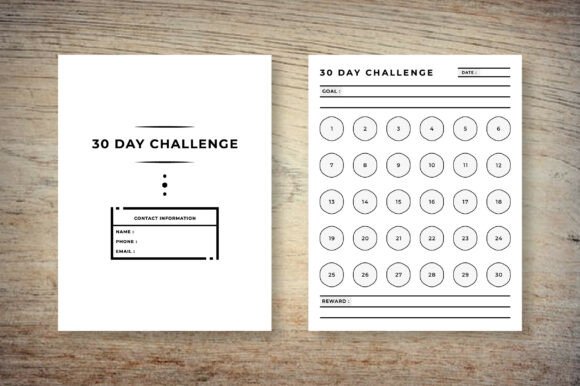
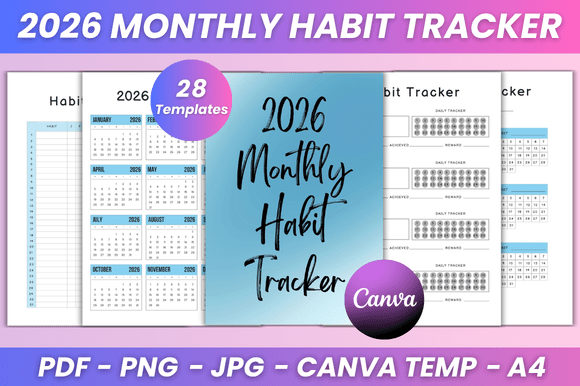
At its core, this interior is a 28-page collection that spans January through December 2026. Each month includes a dedicated planner spread, and the package features 10 distinct habit tracker pages. This variety matters because not all habits are tracked the same way. Some people prefer a simple checklist format; others benefit from visual progress indicators or space for notes. By offering multiple tracker layouts, the design supports different tracking styles within a single product.
Beyond the monthly pages, you get a Belongs To page for personalization, two pages for notes, and a thank-you page. The file formats provided include high-quality print-ready PDF, JPG, and PNG files. All templates are linked through an editable Canva link, meaning you can open, customize, and export without needing any additional software. The specification sheet confirms no bleed, A4 size (8.3 x 11.7 inches), and lifetime access after purchase.
Why Customizability Matters for a Habit Tracker
A fixed, non-editable habit tracker may work for some, but it rarely fits everyone. Color schemes, font sizes, layout density, and even the types of habits tracked vary widely between users. This is where the editable Canva link becomes a genuine strength. You can edit fonts, sizes, colors, layout style, and add photos directly in Canva. That means if the default minimal design feels too sparse or too busy, you adjust it. If you want to match your brand colors for a KDP publication, you do that. If you prefer a different visual hierarchy for tracking morning versus evening habits, you rearrange elements.
This level of control is especially valuable for KDP publishers who need to differentiate their products. Two publishers starting from the same interior can end up with completely different final books because each can apply their own aesthetic and structural choices. For individual users, the ability to tweak the tracker to match a specific goal—whether it is fitness, reading, meditation, or project milestones—makes the tool far more useful than a static print.
Key Features That Support Consistent Use
Ten different habit tracker pages provide the structural variety needed to avoid monotony. Tracking the same habit for twelve months can become tedious if the format never changes. Having multiple layouts allows you to rotate styles monthly or choose a single layout that fits your tracking preference. The clean and minimal design reduces visual clutter, which helps you focus on the data that matters: whether you completed the habit or not.
The 2026 monthly planner pages from January to December give you a broader planning view alongside your habit data. This integration is practical because habits do not exist in a vacuum. If you see that your exercise habit dips in a particular week, the corresponding planner page may reveal a busy travel schedule or a project deadline as the cause. Having both elements in one interior allows for that kind of cross-reference.
Print-ready PDF files ensure that what you see on screen is what you get on paper. The no bleed specification simplifies printing and trimming, especially for those using home printers or short-run print services. Including JPG and PNG formats also gives flexibility if you want to use the trackers digitally in apps like GoodNotes or Notability.
Quality and Practical Value in Real-World Use
From a production standpoint, the interior is designed with KDP specifications in mind. The A4 size (8.3 x 11.7 inches) is standard for many print-on-demand platforms, and the no-bleed requirement makes file setup straightforward. The clean design language means the trackers remain legible even when printed in grayscale, which is a practical consideration for budget-conscious printing.
In real-world use, the value of this interior depends largely on how you customize it. If you leave every template exactly as designed, you get a functional but generic habit tracker. If you invest time in editing the Canva link—adjusting colors to match your brand, adding your own logo, modifying tracker categories to align with specific goals—the result becomes a professional, tailored product that stands out in a crowded marketplace.
For KDP publishers, this interior offers a quick route to market. Instead of designing a habit tracker from scratch or hiring a designer, you acquire a complete, editable foundation. The lifetime access means you can return to the Canva template to create updated versions or new variations without repurchasing. This is particularly useful if you publish multiple journals or planners under different brands.
Who Benefits Most from This Interior
The 2026 Monthly Habit Tracker KDP Interior serves a broad audience, but certain groups will find it especially relevant:
- KDP publishers and content creators who need a professional, editable interior they can customize and republish quickly.
- Freelancers and bloggers who create digital products or printables for their audience and want a high-quality base template.
- Small business owners who produce branded planners for clients, teams, or customers.
- Educators and coaches who guide clients or students through habit formation and need a structured tracking tool.
- Individuals serious about habit tracking who prefer a customizable paper system over generic store-bought planners.
If you fall into any of these categories, the combination of editable templates, multiple file formats, and minimal design gives you a solid starting point without the overhead of creating everything from nothing.
Potential Limitations to Consider
No resource is perfect for every scenario. The interior is designed as a template set, not a complete, printed book. You will need to do the customization work yourself in Canva. If you are unfamiliar with Canva’s editing interface, there is a learning curve, though it is generally shallow. The package includes an editable Canva link, but it does not include a step-by-step tutorial on how to edit each element. Users who prefer ready-to-print, fully completed files may need to invest additional setup time.
Additionally, the A4 size may not suit every market. While it is standard in many regions, some users in North America may prefer US Letter size (8.5 x 11 inches). You can resize within Canva, but that may require adjusting margins and element positions manually. The current specification does not include a bleed, which is fine for most print-on-demand workflows, but if you later decide to add full-bleed elements, you would need to adjust the file setup.
Finally, the habit tracker pages are designed generically. They do not come pre-labeled with specific habits. This is intentional—it allows you to define your own categories—but if you are looking for a tracker with predetermined habits like water intake, sleep hours, or exercise duration, you will need to add those labels yourself.
Practical Recommendations for Getting the Most Out of It
To make this interior work effectively, consider these approaches:
- Define your habit categories before editing. Open the Canva template and replace placeholder text with the specific habits you intend to track. This saves time and ensures consistency across all 12 months.
- Use a consistent color code. Assign colors to habit types (for example, green for health, blue for work, yellow for personal growth) and apply them across all tracker pages. This creates visual patterns that are easy to scan.
- Test print one page before producing the full set. Export a single PDF page, print it, and check alignment, font size, and overall readability. Adjust in Canva if needed before committing to the full print run.
- Leverage the JPG and PNG files for digital use. If you use a tablet for planning, import the PNG versions into your note-taking app and track habits digitally. The same template set serves both paper and digital workflows.
- Back up your Canva edits. Canva saves projects automatically, but it is a good practice to duplicate the template before making major changes. That way, you always have a clean fallback version.
Long-Term Value and Scalability
The 2026 Monthly Habit Tracker KDP Interior is not a one-time use asset. Because you receive an editable Canva link and lifetime access, you can reuse the template for future years by simply updating the calendar dates and month labels. This makes it scalable for publishers who want to produce annual editions without redesigning each year. The same base design can evolve with minor adjustments, maintaining brand consistency across multiple products.
For individual users, the habit tracker can become a yearly tradition. Print a new set each December for the following year, tweaking habits based on what changed. Over time, you build a personal archive of habit data that spans years, all in a consistent visual format. The minimal design helps with this longevity—trends do not become dated quickly, and the layout stays functional year after year.
Clean, minimal design also contributes to reliability. When a template relies heavily on decorative elements, those elements can feel outdated quickly. This interior avoids that trap by prioritizing structure over ornamentation. The result is a product that remains relevant and useful beyond a single season.
Final Thoughts on the 2026 Monthly Habit Tracker KDP Interior
Practical, flexible, and thoughtfully structured, this interior provides a genuine foundation for effective habit tracking. Whether you are publishing under your own brand or building a personal system, the editable Canva link, multiple file formats, and clean layout give you control over the final product without requiring design expertise. The variety of tracker pages addresses the reality that habit tracking is not one-size-fits-all, and the inclusion of monthly planner pages adds context that standalone trackers often miss.
The main consideration is the upfront effort required for customization. If you are prepared to invest that time, the result is a professional, tailored habit tracker that aligns with your specific goals or brand. For KDP publishers, it shortens the production cycle and allows for differentiation. For individuals, it offers a durable tool that can adapt as routines evolve. New designs are added over time, so it is worth checking back if this particular style does not match your needs perfectly. But for anyone looking for a solid, editable, print-ready habit tracking system for 2026, this interior deserves a close look.