Printable Storybook for Kids
Understanding the Purpose and Design of This Storybook
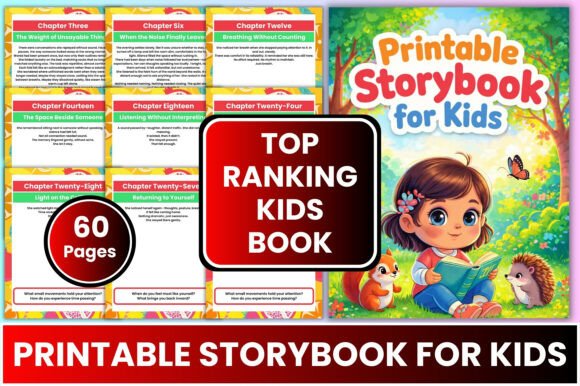
Printable Storybook for Kids is not a typical collection of action-driven tales or moral lessons wrapped in adventure. Instead, it offers fifty chapters built around stillness, light, silence, memory, rest, and emotional softness. Each story stays grounded in small, ordinary moments, written in a minimal style that gives the reader room to pause and breathe. The reflection questions at the end of each chapter gently encourage emotional awareness without forcing a particular response.
For adults who work with children—parents, educators, therapists, or caregivers—this storybook functions as a calm anchor in a daily schedule that often feels rushed. The quiet presence it cultivates is not passive; it is an active practice of slowing down. The design intentionally avoids urgency or narrative tension, making it suitable for readers who benefit from predictability and softness. The printable format adds flexibility: you can use individual chapters as needed, bind the full collection, or integrate specific stories into larger routines.
The minimal writing style also serves a practical purpose in a workflow. Short, unhurried sentences reduce cognitive load, making it easier for a child to follow along while also allowing the adult reader to model calmness. This dual benefit means the storybook supports emotional regulation for both the child and the adult in a shared reading moment.
Where This Storybook Fits Into a Broader Routine or Workflow
Printable Storybook for Kids works well as a preparatory tool before a task, a reflective break during an activity, or a gentle wind-down after a busy period. Its structure allows it to serve multiple entry points in a day, depending on the child’s needs and the adult’s goals.
Consider a common morning routine. Before a child transitions into focused learning or creative work, reading a short chapter about stillness or light can set a calm tone. The reflection question that follows gives a natural opportunity for the child to check in with their own emotional state before beginning a task. This is not a lengthy process—most chapters take only a few minutes to read and discuss—so it fits easily into a pre-work ritual without derailing the schedule.
During a project or learning activity, the storybook can serve as a scheduled pause. For example, after twenty minutes of focused work on a puzzle, drawing, or writing exercise, a short story about silence or memory offers a reset. The reflection question at the end becomes a gentle transition back to the task or a signal to move to something else. This breaks the activity into manageable segments without introducing screen-based rewards or high-stimulus breaks.
After a task, especially one that involved effort or frustration, a chapter on rest or emotional softness provides closure. The child can reflect on how they felt during the activity and what they might need next. This creates a habit of emotional self-checking that carries over into other parts of their daily life.
Practical Example: Bedtime Integration
Bedtime is perhaps the most natural fit for Printable Storybook for Kids. The calm, reflective tone aligns well with the goal of transitioning from daytime activity to sleep. A typical bedtime workflow might include a bath, brushing teeth, and then a story. Replacing a more stimulating story with one of these gentle chapters removes the risk of exciting the child right before sleep. The reflection question can be answered quietly, sometimes without words, as a silent thought before closing the book. Over time, this sequence becomes a reliable cue for rest.
Integrating the Storybook With Other Tools and Resources
Printable Storybook for Kids does not exist in isolation. It works alongside other resources such as breathing exercises, mindfulness apps, journaling prompts, or visual calm-down cards. For example, after reading a chapter about silence, you might follow it with a one-minute breathing exercise using a simple visual timer. The reflection question can serve as a journal prompt for older children who write, or a drawing prompt for younger ones.
For parents who already use a morning basket or a quiet time tray, a printed chapter from this collection can be added as a rotating element. Teachers might incorporate a story into a morning meeting or a calm-down corner. Therapists and counselors can use specific chapters to address themes like emotional awareness or memory without needing to search for appropriate material.
The printable format also allows for customization. You can print only the chapters that match a particular theme for the week, or print the entire book and use a bookmark to track progress. Because the pages are standard 8.5 × 11 inches, they fit easily into binders, folders, or three-ring systems that already exist in a classroom or home office.
If you are a content creator, publisher, or educator developing supplementary materials, this storybook can serve as a foundation. The reflection questions can be expanded into full lesson plans. The minimalist writing style can be used as a mentor text for teaching descriptive writing or emotional vocabulary. The calm tone can also pair well with audio recordings for a listening center.
Implementation Tips for Consistent Use
Consistency matters more than volume when it comes to building a mindful reading habit. Here are several practical suggestions for integrating Printable Storybook for Kids into a regular workflow without feeling like another obligation on the schedule.
- Start with one chapter per day. Choose a consistent time, such as after lunch or before bed, and read a single chapter. The reflection question can be answered aloud, in writing, or silently. This keeps the commitment low and the repetition predictable.
- Use the chapters as transitions. Instead of using the storybook only as a standalone activity, place it between tasks. A quick chapter can mark the shift from free play to cleanup, or from screen time to offline time. The calm tone helps ease the transition rather than creating a hard stop.
- Print and organize by theme. Look through the chapters and group them by emotional focus—stillness, light, silence, memory, rest, softness. Keep these bundles accessible so you can grab one that matches the child’s current emotional need rather than reading in sequential order.
- Pair with a physical object. A small object like a smooth stone, a soft cloth, or a simple candle (if age-appropriate) can be held or looked at during the story. This adds a sensory layer to the reading experience without requiring extra preparation.
- Include the child in the printing process. If appropriate, let the child choose which chapter to print next. This gives them a sense of ownership over the routine and makes the activity feel less imposed.
- Rotate with other calm resources. To avoid monotony, alternate this storybook with other quiet activities like listening to calm music, doing a simple yoga pose, or looking at nature pictures. The storybook remains a core element, but the variety keeps the child engaged.
Long-Term Value and Considerations
The long-term value of Printable Storybook for Kids lies in its repeatability. Because the stories are not plot-driven, they do not lose their impact after a single reading. A chapter about light can feel different on a cloudy morning versus a sunny afternoon. The reflection questions also evolve as the child’s emotional vocabulary grows. What starts as a one-word answer can develop into a full sentence and later a brief conversation.
For adults using this resource in a professional setting—such as a classroom or therapy practice—the printable format means you can produce fresh copies as needed without purchasing another physical book. The 60-page count gives enough material for roughly two months of daily use if you read one chapter per day, but you can stretch it longer by revisiting favorites or using the stories as part of a rotation.
One practical concern is storage. The 8.5 × 11 page size is standard, but if you print the entire book, you will need a binder or a folder that accommodates 60 pages. For those who prefer a bound book, a local print shop or a spiral binding service can turn the PDF into a durable paperback. Alternatively, you can print only a subset of chapters at a time and store them in a simple folder.
Another consideration is age range. The minimal writing style and abstract themes work well with children who have basic reading comprehension and can engage with reflective prompts. Younger children may need more guidance with the reflection questions, while older children can handle them independently. The stories themselves are accessible across a wide age span, but the depth of the reflection will naturally vary.
Finally, think about the role this storybook plays in a larger emotional education plan. It is not a replacement for therapy or structured emotional learning, but it is a low-pressure supplement that normalizes quiet reflection. When used consistently, it can help a child develop an internal habit of pausing and noticing their own feelings. That habit, once formed, becomes a resource they carry into other contexts without needing the book at all.
For the adult using this storybook, the process itself is a form of practice. Sitting down, reading slowly, and asking a question without expecting a particular answer requires patience and presence. The storybook supports that intention by removing the pressure to perform or produce. It offers space without expectation. Over time, that quality makes it a reliable tool in any routine that values calm, connection, and emotional clarity.