Kids Productivity Chore Organizer KDP: A Practical Tool for Building Responsibility
Helping children develop independence, consistency, and a sense of responsibility is one of the most rewarding challenges a parent or educator can take on. The Kids Productivity Chore Organizer KDP offers a structured yet flexible way to guide kids through daily routines, chores, and behavior tracking. But like any tool, its effectiveness depends entirely on how you use it. Many adults jump in expecting instant transformation, only to find the system gathering dust after a week. The key is understanding what this organizer actually does and, just as importantly, what it does not do.
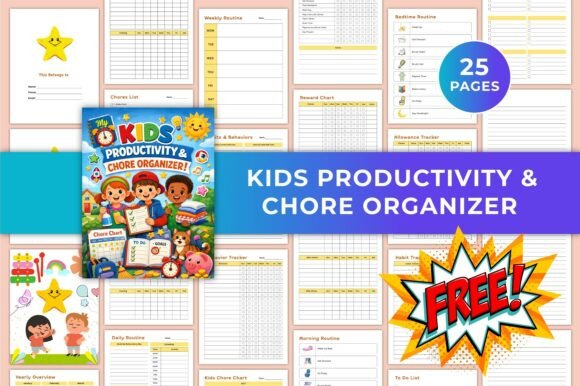
This fully editable Canva template includes everything from yearly overview calendars and daily checklists to reward charts and allowance trackers. It is designed to be customized. That flexibility is its greatest strength, but it also creates a common pitfall. People often assume that simply printing the pages and handing them to a child will produce results. In reality, the organizer works best when it becomes a collaborative project between adult and child, not just another assignment.
Why Adults Misjudge the Effort Required
One of the most frequent misunderstandings is thinking of the Kids Productivity Chore Organizer KDP as a quick fix. It is not a magic solution. It is a framework. The mistake many adults make is treating the template like a static document rather than a living system. For example, printing out the daily routine planner and expecting a five-year-old to follow it independently overlooks the need for teaching, modeling, and gradual handover of responsibility. The result? Frustration on both sides.
Another common error is overloading the system. The template includes numerous pages: chore charts, reward trackers, to-do lists, behavior logs, allowance sheets, and notes pages. Some adults feel compelled to use every single page from day one. That approach quickly overwhelms both the adult and the child. Instead, start small. Choose two or three pages that address the most immediate needs, such as the morning routine checklist and a simple chore chart. Once those become habits, slowly introduce additional elements like the behavior tracker or reward chart.
The Overlooked Power of Customization
Because this is a fully editable Canva template, you can adjust fonts, colors, layouts, and wording. Yet many adults skip this step entirely. They use the default design and wonder why their child does not engage with it. Children are far more likely to use a system that feels personal. Sit down with your child and let them choose colors, pick a fun font, or even help rename some of the tasks. If the template says "make bed" but your child calls it "fluff the pillow kingdom," change it. That small investment in personalization pays enormous dividends in buy-in.
Another overlooked detail is the reward chart and allowance tracker. These pages are powerful motivators, but only if the goals are realistic and the rewards are meaningful to the child. A common mistake is setting goals that are too distant or rewards that feel abstract. A child might not care about earning ten points for a prize that is weeks away. Instead, use shorter intervals. Let them earn small rewards daily or weekly, and involve them in deciding what those rewards are. The allowance tracker works similarly: if you tie chores to money, make the payout frequent enough to keep the connection clear in the child's mind.
Mistakes in Routine Building and Scheduling
The daily and weekly routine planners are central to this organizer. But many adults misuse them by trying to schedule every minute. Kids need downtime, spontaneity, and flexibility. A well-intentioned parent might pack the daily routine planner with tasks from morning until night, leaving no room for free play or unexpected breaks. That type of schedule feels more like a prison than a guide. The better approach is to focus on anchor points: morning routines, after-school tasks, and bedtime procedures. Leave the gaps unfilled. Let the child have ownership over their free time.
Similarly, the weekly routine chores planner should include age-appropriate tasks. One of the biggest mistakes is assigning chores that are either too easy or too difficult. A toddler can put toys in a bin, but they cannot vacuum a room properly. A ten-year-old can load a dishwasher, but may struggle with deep cleaning. Match tasks to ability, and be willing to adjust. The Kids Productivity Chore Organizer KDP allows you to edit the chores list, so take advantage of that. Remove tasks that do not fit your household and add ones that do.
Behavior Tracking Without Shame
The behavior tracker and habits tracker pages are among the most sensitive parts of this system. Used incorrectly, they can feel like surveillance rather than support. A common mistake is using the tracker to highlight failures. If a child skips a chore or has a difficult morning, the adult might mark it negatively, which can lead to shame and disengagement. Instead, frame the tracker as a tool for noticing patterns and celebrating progress. If Monday was rocky but Tuesday showed improvement, talk about what changed. Use the tracker as a conversation starter, not a judgment record.
The responsibilities checklist pages work best when they are reviewed together. Do not just hand the child the page and expect them to fill it out alone, especially if they are young. Walk through it with them. Ask questions: "What do you think went well today? Is there anything you want to try differently tomorrow?" This turns the checklist into a collaborative reflection tool rather than a chore itself.
What to Check Before Committing to This System
Before you download and customize the Kids Productivity Chore Organizer KDP, consider a few practical factors. First, make sure you have access to Canva and understand the basics of editing a template. The template is fully editable, but you need some familiarity with Canva's interface to change fonts, colors, and content. If you are new to Canva, spend fifteen minutes learning how to edit text and swap colors before trying to overhaul the entire design.
Second, think about your printing setup. The organizer is designed to be printed, so you will need a printer and paper. Decide whether you want to print new pages every week or laminate reusable versions. Some families print a fresh weekly chore chart and fill it out together each Sunday evening. Others prefer to print a monthly version and track progress in one go. Neither is right or wrong, but knowing your preference upfront prevents frustration later.
Third, consider your child's age and temperament. This system is flexible enough for ages roughly three to twelve, but the approach will differ dramatically. A preschooler needs picture-based checklists and immediate rewards. An older child can handle text-based planners and longer-term goals. If you try to use the same format for both, you will likely need to adjust. The beauty of the editable template is that you can create multiple versions for different children or even different seasons of the year.
Realistic Examples of Better Approaches
Instead of printing all thirty-two pages at once, try this: start with the morning routine checklist and the reward chart. Use the reward chart to track morning success for one week. If the child completes their morning tasks consistently, add the evening routine the following week. Build slowly. The yearly overview calendar can wait until you have established daily habits. By introducing the system in layers, you avoid overwhelming everyone involved.
Another better approach: use the notes pages as a weekly family meeting log. Each Sunday, sit down with your child and review the past week. What worked? What was hard? Write down their thoughts in the notes section. This turns the organizer into a living document that evolves with your child. It also teaches reflection and communication skills that go far beyond chores.
Also, avoid tying every single task to a monetary reward. Some tasks, like making their bed or brushing their teeth, are non-negotiable life skills. Reserve the allowance tracker for extra chores that go above and beyond basic expectations. This distinction helps children understand that some responsibilities are part of being a family member, not a paid job.
Practical Advice for Long-Term Success
Consistency is more important than perfection. You will have weeks where the organizer is barely used. That is normal. The mistake is giving up entirely after one missed week. Instead, pick it back up the following Monday without guilt or lecture. The Kids Productivity Chore Organizer KDP is designed to be flexible, so use that flexibility to your advantage.
Keep the system visible. Print the daily checklist and post it on the refrigerator or a bulletin board at the child's eye level. Out of sight quickly becomes out of mind. Similarly, the reward chart should be somewhere the child can see their progress. Visual progress is motivating in a way that a hidden notebook never can be.
Finally, celebrate small wins. Did your child follow their morning routine for three days in a row? That deserves acknowledgment. Did they remember to do a chore without being reminded? That is worth noting on the behavior tracker. Positive reinforcement, used consistently, builds momentum. The organizer is not about catching mistakes. It is about building a habit of responsibility, one small task at a time.
When you approach the Kids Productivity Chore Organizer KDP as a flexible, collaborative tool rather than a rigid system, it becomes an asset for the whole family. It helps children learn that routines are not punishments and that responsibility can feel satisfying. For the adults, it reduces the mental load of constantly reminding and negotiating. Instead of being the enforcer, you become the guide. That shift alone makes the effort worthwhile.