My Parkrun Journey Personal Running Log: A Smarter Way to Track Every 5K
If you have ever finished a Saturday morning 5K and thought, “I wish I could remember how that felt compared to last month,” you are not alone. Many runners lace up week after week, collecting finish times, location pins, and volunteer credits without a clear system to pull it all together. That is where the idea of a dedicated log becomes more than a notebook—it becomes a tool for consistency, reflection, and genuine progress.
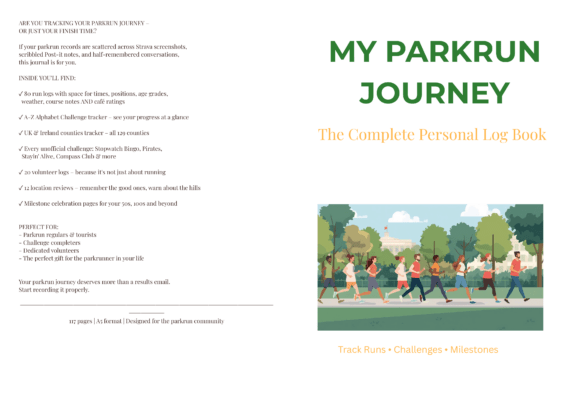
My Parkrun Journey Personal Running Log is designed specifically for people who run, walk, or volunteer at weekly 5K events. It provides structured space for up to 70 runs, PB tracking, county checklists, milestone celebrations, volunteer logs, and yearly summaries. But owning a good journal is only half the story. How you use it, what you record, and what you leave out can make the difference between a log that collects dust and one that helps you run smarter.
Many people pick up a running log expecting instant motivation. The real value comes from avoiding a few common mistakes that can undermine the experience. Below are the pitfalls worth watching for, along with practical ways to get the most out of your log from the very first entry.
Mistake One: Only Tracking the Clock and Ignoring Context
A finish time is satisfying, but it rarely tells the full story. A 24-minute 5K on a flat course in cool weather is completely different from the same time on a hilly course after a week of poor sleep. When runners record only the official time and position, they lose the nuance that explains why some runs feel strong and others feel like a slog.
The better approach is to use the How did it feel tracker and the weather fields consistently. A simple note like “tired legs from yesterday’s hike” or “headwind on the back straight” gives you context weeks later when you review your progress. Over time, patterns emerge—maybe you consistently run faster in cooler months, or you perform better after a rest day. Without that context, it is easy to misjudge your own ability.
Example: One runner assumed they were losing fitness because their times slowed over three weeks. A quick look back revealed they had been running on a tougher course each week. The log showed the truth: their effort was actually improving.
Mistake Two: Treating the Log as a Record Instead of a Tool
It is tempting to fill in the details after the fact and close the book until next week. That turns the journal into a passive archive. The real benefit comes when you treat it as a working tool—something you look at before your run as well as after.
Before a run, check your last few entries. How did you feel that day? What time did you aim for? Use that information to set a realistic goal for today. After the run, compare your prediction with the actual outcome. This simple before-and-after habit turns the log into a feedback loop that sharpens your pacing, effort awareness, and consistency.
A common misunderstanding is that the log is “just for data.” In reality, the notes section is where most of the insight lives. Write down what worked, what did not, and what you want to try differently next time. That small habit turns a record into a coach.
Mistake Three: Overlooking the Volunteer Log
Many runners focus exclusively on their own finish times and ignore the volunteer side of the journal. The Volunteer Marshal Log is not just a bonus page—it is a central feature that reflects the community spirit that makes weekly 5K events sustainable.
If you volunteer occasionally, track your roles and credits. You might be surprised how quickly those add up toward 10, 25, 50, or even 100 credits. Recording volunteer milestones alongside running milestones gives you a fuller picture of your journey. It also reminds you that progress is not only about speed. Being a marshal, timekeeper, or barcode scanner contributes to the event just as much as running does.
Better approach: After each volunteer shift, note one thing you enjoyed or learned. Over a year, that list becomes a meaningful record of your contribution. Runners who log both their runs and their volunteer roles often feel more connected to the community and stay engaged longer.
Mistake Four: Skipping the County Tracker Until “Later”
The UK Ireland Counties Tracker is one of the most engaging features in this log, yet many runners ignore it until they have already visited several locations. By then, they have to reconstruct where they have been from memory or old results emails. That is unnecessary work.
Start using the checklist from day one, even if you only run at your home event. As soon as you travel to a different location—whether it is across town or across the border—record the county. The tracker covers England, Scotland, Wales, Northern Ireland, and the Republic of Ireland, so you have a clear visual of your progress. Over time, that simple tick-box exercise becomes a motivator to plan new trips and explore areas you might otherwise overlook.
One runner made it a goal to tick off five new counties in a year. Each new location brought a different course, different scenery, and a different community experience. The tracker turned a casual hobby into a mini adventure. Without it, those trips would have been just another run rather than part of a larger, recorded journey.
Mistake Five: Neglecting Milestone Celebrations
Hitting 10, 25, 50, 100, 250, or even 500 runs is a genuine achievement. Yet many runners fail to capture the moment beyond a quick social media post. The Milestone Celebrations pages exist to help you record those runs in a way that feels significant.
Do not wait until you reach a milestone to look at those pages. Review them ahead of time so you know what information to capture. Write down who was with you, how the course felt, and what the day was like. A few sentences and a small detail—like the weather or a funny moment—will make that entry something you enjoy reading years later.
If you skip this step, you lose the chance to reflect on how far you have come. Milestones are not just numbers. They are markers of consistency, effort, and community involvement. Treat them that way.
Mistake Six: Leaving the Yearly Summary to the Last Day of December
The Yearly Summaries pages are designed to give you a big-picture view of your running year. But if you wait until the final week to fill them in, you are relying on memory and scattered notes. That is when mistakes creep in—forgetting a volunteer credit, misremembering a best time, or overlooking a favorite run.
A better habit is to fill in the summary month by month. Keep a running tally of total distance, best and worst times, average time, volunteer credits, and new counties visited. When December arrives, you already have a clear picture. This also helps you spot trends mid-year. If you notice your average time slowing in July, you can adjust your training before the year ends.
One runner used monthly check-ins on the summary page to realize they had not volunteered in six months. That small insight prompted them to sign up for a marshal role the next week. Without the summary, that gap would have gone unnoticed.
What to Check Before You Start Using the Log
Before you write the first entry, take a few minutes to familiarize yourself with the layout. Flip through every section: run log pages, PB tracker, county checklist, milestone pages, volunteer log, and yearly summaries. Knowing where everything lives prevents you from missing features later.
Decide how you want to use the PB Tracker. Some people update it only when they set a new personal best. Others track every attempt and watch the line trend over time. Both approaches work, but it helps to decide upfront so you stay consistent.
Also consider how much detail you want in the notes section. It can be as simple as “felt good” or as detailed as a short paragraph. The key is to write something every time. Even two or three words add value later.
Finally, set a small goal for the first month. It might be “complete all fields for every run” or “visit one new county.” A clear goal gives the log purpose from the start and builds the habit of consistent use.
Why a Dedicated Log Beats a General Notebook
A general notebook requires you to create your own structure every time. You have to remember which details to record, and it is easy to skip important fields like weather, age grade, or how you felt. A dedicated log like My Parkrun Journey Personal Running Log removes that friction. Every prompt is there, ready for you to fill in. That makes it easier to stay consistent, especially when motivation dips.
Runners who use a purpose-built log often report feeling more engaged with their own progress. The simple act of writing down data and reflections reinforces the habit of showing up. It turns a weekly event into a recorded story—one where every 5K really does tell a story.
Whether you are chasing a new PB, working through the county checklist, or building volunteer credits, a structured log helps you see the full picture. Avoid the common mistakes outlined here, and you will get far more than a record of finish times. You will get a personal history of effort, community, and steady improvement.