Digital 2026 ADHD Cleaning Template: A Smarter Path to a Clutter-Free Home
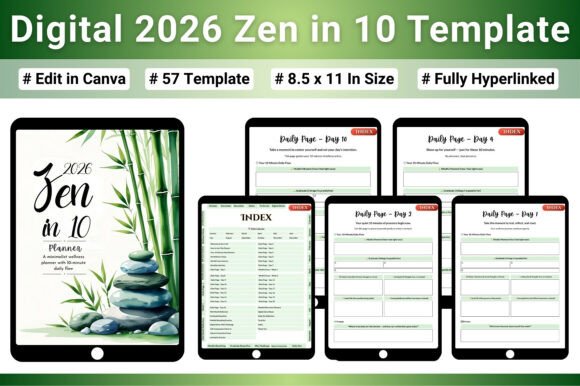
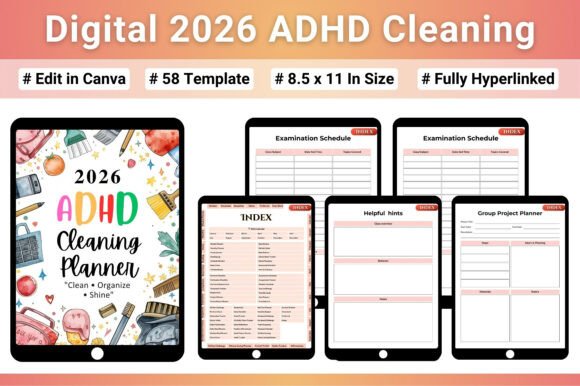
If you have ever felt paralyzed by the sight of a messy room, unsure where to begin, or found yourself starting five different cleaning tasks only to finish none, you are far from alone. For individuals with ADHD, the gap between wanting a clean home and actually achieving it can feel enormous. Traditional cleaning schedules often amplify the problem — they demand sustained attention, rigid timelines, and a linear approach that rarely matches how the ADHD brain works. That is precisely where the Digital 2026 ADHD Cleaning Template steps in. Designed with neurodivergent thinking in mind, this 58-page fully hyperlinked PDF turns cleaning from a source of shame into a series of small, achievable wins.
This planner is not simply a calendar with checkboxes. It is a thoughtfully engineered system that respects how motivation, focus, and follow-through actually function in ADHD minds. Rather than asking users to force themselves into a neurotypical cleaning routine, it adapts the process to fit shorter attention spans, the need for visual cues, and the power of immediate navigation. The result is a cleaning experience that feels less like a chore and more like a manageable, even satisfying, part of daily life.
What Makes a Cleaning Planner Truly ADHD-Friendly?
Most cleaning planners assume you can follow a linear sequence of tasks without becoming distracted, overwhelmed, or bored. The Digital 2026 ADHD Cleaning Planner Template takes a fundamentally different approach. It acknowledges that executive dysfunction is real, that starting is often harder than doing, and that a clean home is built through consistency, not perfection.
The template is built around zone cleaning, a method that divides your home into distinct areas and focuses on one zone at a time. Instead of trying to clean the entire house in a single session, you work on a single zone for a short period. This reduces the mental load of decision-making and prevents the “all or nothing” trap that so often leads to burnout. The planner includes daily and weekly layouts specifically tailored to this system, so you always know exactly which area to target and what actions to take.
Another key ADHD-friendly feature is the fully hyperlinked navigation. Every page connects to relevant sections, so you can jump from the 2026 calendar to your weekly challenge page or monthly overview with a single tap. No endless scrolling. No losing your place. This design minimizes friction and keeps you moving forward — exactly what a distracted brain needs.
58 Pages of Purposeful Structure
At first glance, 58 pages might seem like a lot. But each page has a clear purpose and a distinct role within the system. The planner includes:
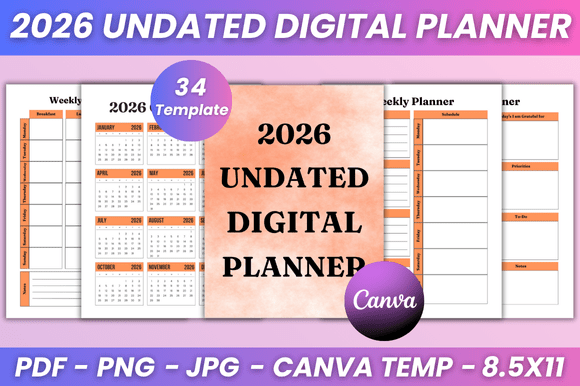
- A full 2026 calendar for big-picture planning and deadline setting
- Monthly overview pages that let you see your cleaning goals at a glance
- Daily and weekly planning layouts built for short bursts of focused cleaning
- Notes and to-do list pages for capturing thoughts, supplies needed, or recurring issues
- ADHD-specific cleaning systems that break down tasks into micro-steps and reward progress
This structure prevents the planner from becoming just another unused download. Every element works together to reduce overwhelm while maintaining flexibility. You can use it exactly as designed or adapt it to your own rhythms — the hyperlinked format makes customization effortless.
How the Digital Format Supports ADHD Workflows
The digital nature of this template is not an afterthought; it is a core advantage. PDFs designed for annotation apps like GoodNotes, Notability, or even standard tablet PDF readers offer several benefits over paper planners:
- Instant navigation — tap any link to jump between sections without losing your train of thought
- No commitment to permanence — erase mistakes, move tasks, or rewrite notes without the frustration of crossing things out
- Portability — carry your entire cleaning system on your iPad, tablet, or desktop without adding physical clutter
- Searchability — locate specific zones, dates, or notes without flipping pages
For someone with ADHD, these features reduce the cognitive barriers that often lead to abandonment of organizational systems. You are not fighting against the tool; the tool is working with your brain.
Real-World Scenarios: How the Template Works in Practice
Imagine it is a Tuesday evening. You have fifteen minutes before your favorite show starts. Instead of staring at a vaguely messy living room, you open the Digital 2026 ADHD Cleaning Template on your tablet. You tap the hyperlink to today’s date in the weekly layout. The page shows three small tasks for the living room zone — pick up stray items, wipe surfaces, fluff cushions. Each task takes less than five minutes. You complete them, check the boxes, and close the planner. That is the entire cleaning session.
On a weekend with more time, you might open the monthly overview to see which zone needs attention. You decide to tackle the kitchen zone. The planner breaks it into sub-zones: counters, sink, floor. You work through them one by one, taking breaks as needed. The progress is visible, the steps are clear, and you never have to decide what to do next.
This micro-task approach is grounded in behavioral science. Small, immediately achievable goals trigger dopamine release, which can build momentum and reduce resistance to future cleaning sessions. Over time, these micro-sessions add up to a consistently cleaner home without the emotional toll of marathon cleaning days.
Who Benefits Most from This Cleaning System?
While anyone can use this planner, it is especially valuable for specific groups:
Adults with ADHD form the primary audience. The template directly addresses common pain points: difficulty starting tasks, losing focus mid-cleaning, forgetting what was already done, and feeling overwhelmed by the scope of work. The zone system and hyperlinked layout are designed to keep you grounded and oriented.
Busy families will find the planner useful for delegating tasks and tracking who does what. The shared digital format allows multiple family members to access the same system, reducing the mental load on one person.
Homemakers and minimalists who value an orderly space but resist rigid routines will appreciate the flexibility. The planner does not demand daily deep cleaning; it encourages sustainable habits that fit your lifestyle.
Anyone experiencing burnout or executive dysfunction — even without a formal ADHD diagnosis — can benefit from the reduced friction and clear structure this template provides.
Addressing Common Concerns Before You Start
Some people worry that a digital planner requires technical skills or expensive software. In reality, the Digital 2026 ADHD Cleaning Template works on most devices with a PDF reader. Free apps like Adobe Acrobat Reader, Apple Books, or built-in tablet readers support hyperlinks. For full annotation features, GoodNotes and Notability are popular choices, but they are not mandatory. The template remains functional even in basic PDF viewers.
Another common concern is whether 58 pages will feel bloated. The hyperlinked design prevents this. You only see the pages you need when you need them. The planner does not require you to flip through every page; you navigate directly to your current zone and date. This prevents the sensation of drowning in information.
Some users also wonder if they need to commit to the zone system strictly. Not at all. The template is a tool, not a rulebook. If you prefer to focus on a particular room for a week, you can adapt the zones accordingly. The structure exists to support you, not constrain you.
Practical Tips for Getting the Most Out of the Planner
To maximize the benefits of the Digital 2026 ADHD Cleaning Planner Template, consider these approaches:
- Set a timer for each cleaning session. Use the planner’s daily layout to identify three tasks, then work for ten or fifteen minutes. When the timer ends, stop — even if you want to keep going. This prevents burnout and reinforces the habit.
- Use the notes pages to track what works and what does not. ADHD brains are excellent at pattern recognition once patterns are made visible. Write down which zones feel easiest, which times of day you are most productive, and any adjustments that improve your flow.
- Pair the planner with music or a podcast. The combination of a clear visual guide and audio stimulation can reduce resistance to starting and help sustain focus during tasks.
- Review the monthly overview at the start of each month. This big-picture glance helps you anticipate busy weeks and adjust cleaning expectations accordingly. It also prevents last-minute panic before guests arrive.
- Celebrate small wins. The act of checking a box in the planner is a tangible reward. Do not rush past it. Acknowledge that you showed up, even if you only completed two out of three tasks.
Why This Approach Outperforms Traditional Cleaning Plans
Traditional cleaning schedules often assume consistent motivation, linear progress, and the ability to rebound quickly from missed days. The ADHD brain does not operate that way. Missing one day can spiral into weeks of avoidance. The Digital 2026 ADHD Cleaning Template builds in forgiveness. Because each day stands alone within a zone system, a missed session does not derail an entire week. You simply pick up with the current zone or extend it by a day. There is no penalty, no guilt, and no overwhelming backlog.
This flexibility is what makes the template sustainable. It acknowledges that life happens, energy fluctuates, and some days are harder than others. The system adapts, so you do not have to.
Beyond Cleaning: A Framework for Calm
While the primary function of the Digital 2026 ADHD Cleaning Template is to help you maintain a clean home, its effects often extend beyond cleanliness. Users report feeling less anxious about their living space, more in control of their environment, and less prone to shame spirals tied to mess. The planner shifts cleaning from a moral obligation to a practical, manageable activity. That shift in perspective can reduce stress and improve overall well-being.
A tidy home is not the ultimate goal — it is a byproduct of a system that respects how you function. The planner helps you build habits that last, not because you force yourself to follow them, but because they actually work with your brain.
Whether you are new to structured cleaning or have tried countless systems that did not stick, the Digital 2026 ADHD Cleaning Template offers a fresh approach. It is specific enough to provide direction, flexible enough to accommodate real life, and forgiving enough to keep you coming back. In 2026, that combination might be exactly what you need to finally feel organized, calm, and clutter-free without the burnout.