1200 Shopify Store Design Inspirations: A Practical Resource for Ecommerce Design Ideas
Creating a Shopify store that converts visitors into customers requires more than just functional code and reliable hosting. The visual presentation, layout choices, and branding decisions all play a significant role in how shoppers perceive a business. For designers, store owners, and agencies looking for a structured way to explore layout options, the 1200 Shopify Store Design Inspirations collection provides a large library of curated ideas. This article takes a practical look at what this resource offers, how it compares with other approaches to gathering design inspiration, and when it may or may not be the right fit for your workflow.
Understanding What This Collection Offers
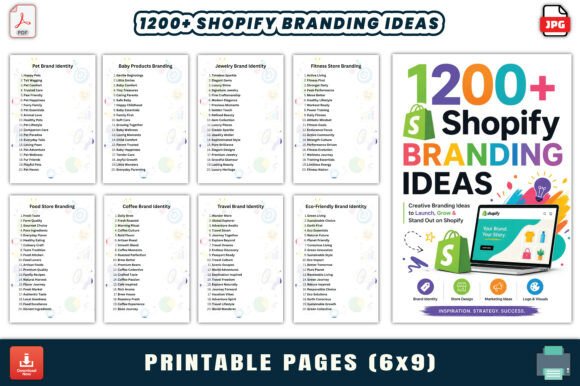
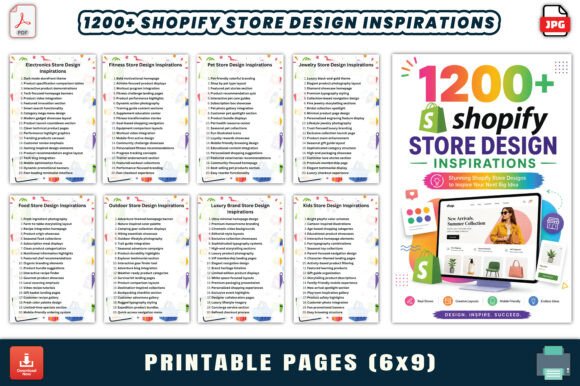
At its core, this resource is a bundle of 62 interior pages containing 1,240 individual inspiration ideas for Shopify store designs. The package includes high-quality PDF, JPG, and PNG files, all formatted at 6 × 9 inches, and is delivered as a digital download. The topics span a wide range of industries, including fashion, beauty, home decor, electronics, jewelry, pet supplies, fitness, food and beverage, kids and toys, luxury brands, travel and outdoor, baby and nursery, handmade products, and digital product shops.
What makes this collection distinct is its sheer volume of ideas organized into a single, portable format. Instead of browsing dozens of separate websites, Pinterest boards, or Dribbble shots, you have access to over a thousand visual concepts in one download. This can save considerable time during the early brainstorming phases of a project. The inclusion of multiple file formats also adds flexibility: the PDF works well for digital viewing on tablets or laptops, while the JPG and PNG files can be inserted into mood boards, client presentations, or design briefs without additional conversion steps.
Another distinguishing feature is the range of niches covered. Many inspiration sources focus heavily on fashion or tech stores, but this collection intentionally includes less common categories such as pet stores, baby nursery shops, handmade product stores, and digital product shops. For designers who work across diverse client industries, having all these ideas in one place reduces the need to search for niche-specific references separately.
How It Compares with Other Sources of Design Inspiration
Most designers and store owners use a combination of methods to find layout and branding ideas. Browsing live Shopify stores, exploring theme marketplaces like the Shopify Theme Store or ThemeForest, and searching inspiration platforms such as Pinterest, Dribbble, Behance, or Awwwards are common approaches. Each method has strengths and limitations, and the 1200 Shopify Store Design Inspirations collection sits alongside these options as a different kind of resource.
Live store browsing gives you real-world examples of how stores function, but it requires significant time to find stores in your specific niche, and you may only see a few layouts before running out of leads. Theme marketplaces show polished, ready-to-use designs, but they often highlight only the most popular themes, and you are limited to the layout options those themes provide. Inspiration platforms offer endless variety, but the quality is inconsistent, and you often need to filter through many irrelevant results to find what you need.
In comparison, the 1200 Shopify Store Design Inspirations collection offers a curated, pre-filtered set of ideas. You do not need to spend hours searching or sorting. The tradeoff is that these are static images, not live, interactive stores. You will not see how a layout behaves on mobile, how fast it loads, or how the navigation works in practice. The collection is best used as a starting point for visual direction rather than a final blueprint for development.
Another alternative is hiring a professional designer or agency to create custom concepts. This approach delivers tailored results but comes with a significantly higher cost and longer timeline. For those who cannot invest thousands of dollars in the discovery phase, a curated inspiration bundle offers a cost-effective way to generate direction before committing to a custom build.
Strengths and Practical Benefits of Using a Curated Collection
The most obvious strength of the 1200 Shopify Store Design Inspirations bundle is the volume of ideas. With 1,240 concepts across 62 pages, you are unlikely to run out of visual references quickly. This is especially valuable for agencies that handle multiple store launches each month or for freelancers who need to present several distinct options to a single client. Having a large library of ideas allows you to mix and match elements from different concepts, creating unique combinations without starting from scratch.
Another practical benefit is the format flexibility. The inclusion of both raster images and a vector-friendly PDF means the files can be used in various workflows. Designers can drop JPG or PNG files directly into Figma, Canva, or Adobe XD as reference layers. The PDF can be printed or viewed on a tablet as a portable portfolio. This versatility reduces friction during the design process.
The niche coverage is another strength worth considering. Many general inspiration sources are heavy on fashion and lifestyle stores, leaving less common categories underserved. If you build stores for pet supplies, handmade goods, or digital products, finding relevant references can be challenging. This collection specifically includes those niches, which can save time and provide ideas that are harder to find elsewhere.
Additionally, the resource can serve as a teaching or onboarding tool. For junior designers learning ecommerce layout principles, having a wide range of examples helps them understand how different product categories require different visual hierarchies. Store owners who are designing their own shops can also use the collection as a guide to communicate their preferences to a designer more clearly.
Tradeoffs and Situations Where Other Approaches May Fit Better
While the collection offers clear advantages, it also has limitations that are important to recognize. The most significant is that all ideas are static representations. You cannot click through a product page to see how filtering works, test the checkout flow, or evaluate the mobile responsiveness of a layout. For developers and store owners who need to assess real-world functionality, live store browsing or theme testing is still necessary.
Another tradeoff is the lack of customization. A curated collection shows you what others have done or what the creator has compiled, but it does not offer the ability to adjust elements and see how they look in different contexts. If you need a design that is highly specific to a brand with unique requirements, a custom approach or a flexible theme may be a better fit. The collection works best as a source of inspiration, not as a template that can be directly implemented.
There is also the question of originality. Because the collection contains a large number of ideas, some concepts may overlap with designs already in use. While this is common across all inspiration sources, it is something to keep in mind if you are aiming for a completely unique look. The collection is best used as a springboard for your own creative direction rather than a library of ready-to-copy layouts.
For designers who prefer interactive exploration, tools like Shopify's theme preview or page builders such as PageFly or GemPages allow you to test layouts in real time. These tools require more time to learn but provide hands-on control that a static collection cannot offer. Similarly, if your budget allows, working with a professional designer from the outset may produce a more tailored result, though at a higher cost.
Realistic Examples of When This Resource Adds Value
Consider a freelance designer who has just landed a client in the pet supplies niche. The client wants a modern, trustworthy, and playful store design, but the designer primarily works with fashion brands and does not have many pet store references. Instead of spending several days searching for relevant examples, the designer can open the pet store section of the 1200 Shopify Store Design Inspirations collection, review 15 to 20 ideas, and quickly identify layout patterns that suit the client's brand. This saves time and provides a professional starting point for the design brief.
Another example is an entrepreneur launching a handmade product shop. They have limited design experience and a small budget. Buying a premium theme may feel too expensive, and they are unsure what layout style matches their product category. The collection gives them a visual education on how other handmade stores structure their homepages, product pages, and navigation. They can then choose a low-cost theme that aligns with the layout ideas they liked, making the entire process more informed and efficient.
For agencies pitching to a client in the food and beverage space, the collection can be used to quickly assemble a mood board. By pulling JPG files from the relevant section, the agency can present multiple layout directions in the first meeting, demonstrating expertise and saving preparation time. This can strengthen the pitch without requiring hours of research.
Key Factors to Consider When Choosing a Design Inspiration Source
When deciding whether the 1200 Shopify Store Design Inspirations collection is right for you, consider the following factors:
Your workflow stage. If you are in the early discovery or brainstorming phase, a large curated collection can accelerate idea generation. If you are already past that stage and need to refine a specific layout, you may benefit more from interactive tools or live store testing.
The variety of niches you serve. Designers and agencies working across multiple industries will find the broad category coverage valuable. Those who specialize in a single niche may prefer a deeper, more focused resource for that specific area.
Your budget and timeline. The collection is a one-time purchase with no recurring costs, making it a budget-friendly option for ongoing inspiration. If you have the budget and need a fully custom design, hiring a professional may be a better use of funds.
Your comfort with static references. If you can translate a static image into a functional layout using your own design and development skills, the collection will serve you well. If you need interactive demos or pre-built code, consider combining the collection with a theme preview or page builder.
Client presentation needs. The JPG and PNG files are easy to insert into slides, mood boards, and proposals. If you frequently present visual concepts to clients, the collection can improve the professionalism of your early-stage presentations.
Making the Right Decision for Your Project
No single resource can cover every aspect of Shopify store design. The 1200 Shopify Store Design Inspirations collection excels as a large, organized, and affordable source of visual ideas across many niches. It is not a replacement for live testing, custom design, or hands-on development tools, but it fills a specific gap: providing a broad base of references that can save time and spark creativity during the early stages of a project.
If you regularly find yourself searching for layout ideas across multiple tabs and still coming up short, or if you work with clients in diverse industries and need a quick way to generate direction, this collection offers a practical solution. On the other hand, if you already have a strong internal library of live stores and themes, or if your projects consistently require deep customization from the start, you may find that a combination of theme marketplaces and live browsing serves you just as well.
Ultimately, the best approach is to match the resource to the specific need. For broad inspiration and fast idea generation, the 1200 Shopify Store Design Inspirations bundle is a well-structured option. For implementation and fine-tuning, pair it with interactive tools and real store testing. Used this way, it becomes a valuable part of a balanced design workflow rather than a standalone solution.