2026 CBT Anxiety Workbook: Your Guided Path to Calm
If you have ever felt the weight of anxiety pressing into your daily routines—making simple decisions feel exhausting or turning ordinary moments into mental struggles—you are not alone. Many adults juggling careers, creative projects, side businesses, or family responsibilities find themselves searching for something more reliable than fleeting self-help tips. The 2026 CBT Anxiety Workbook offers a different kind of support: a structured, therapeutic planner grounded in Cognitive Behavioral Therapy techniques that you can use day after day throughout the entire year. Rather than promising instant relief, this workbook gives you a repeatable framework to understand your thought patterns, regulate your emotions, and gradually build a calmer, more balanced inner life.
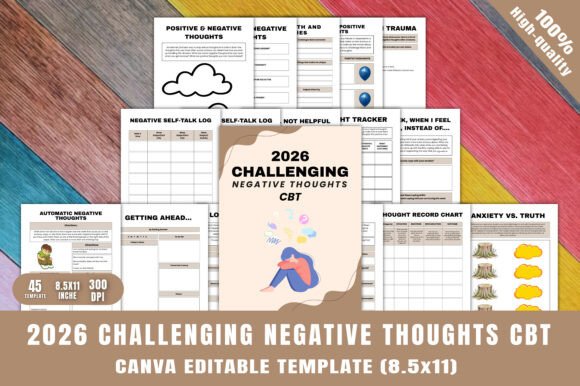
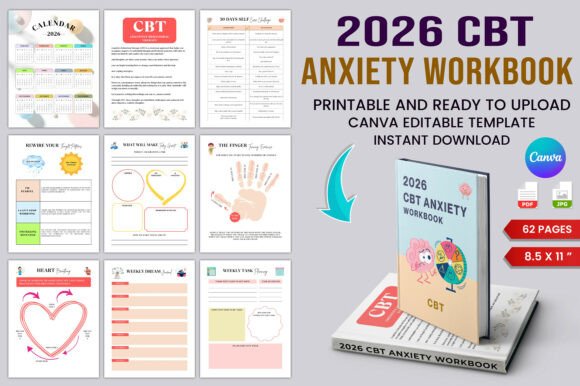
What makes this resource stand out is its combination of daily planning tools with evidence-based exercises. It is not just a journal where you write whatever comes to mind. It is a guided system that gently directs your attention toward the thoughts and behaviors that fuel anxiety—and then offers concrete steps to reshape them. Whether you are a freelancer trying to manage deadline stress, a small business owner navigating uncertainty, or a parent seeking emotional steadiness, the workbook meets you where you are. It does not assume you have hours to spare. Its page size of 8.5×11 inches provides ample room for reflection without feeling overwhelming, and the inclusion of 50 different Canva templates means you can customize your experience to match your personal style or professional needs.
Why a CBT-Based Workbook Matters for Real Life
Cognitive Behavioral Therapy is one of the most researched and respected approaches for managing anxiety. It works by helping you identify the automatic negative thoughts that trigger anxious feelings and then replace them with more realistic, balanced perspectives. The 2026 CBT Anxiety Workbook brings this process into a practical, year-long format. Instead of reading about CBT in theory, you actively engage with it through exercises, grounding techniques, and reflective prompts. Over time, this repetition helps rewire how you respond to stress. For example, if you tend to catastrophize a project delay or overthink a client’s email, the workbook walks you through steps to pause, examine the evidence, and choose a calmer response. This is not about pretending everything is fine. It is about building mental habits that reduce unnecessary suffering.
One of the most practical benefits is the full 2026 planner calendar embedded in the workbook. You do not need to juggle multiple tools. Your schedule, your emotional check-ins, and your CBT exercises all live in one place. For professionals and entrepreneurs who already feel stretched thin, this consolidation alone can save time and mental energy. Instead of switching between a calendar app, a journal, and a self-help book, you open one resource and everything is connected. The editable Canva link also means you can adapt the layout if your planning style changes mid-year. That flexibility matters when life throws unexpected challenges your way.
Who Benefits Most from This Approach
Adults aged 20 to 50 with busy, multi-layered lives often find the most value in this workbook. If you are a blogger or content creator, the grounding exercises and emotional regulation tools can help you manage the highs and lows of audience feedback or creative blocks. If you are a marketer or educator, the structured reflection may improve your communication with colleagues or students by helping you approach interactions with less reactivity. Freelancers and hobbyists who work alone sometimes struggle with the lack of external structure—this workbook provides a gentle scaffold that keeps you connected to your goals and emotional health.
However, it is worth noting that a workbook is not a substitute for professional therapy. If you are experiencing severe anxiety, panic attacks, or depression, you should consult a licensed mental health professional. The 2026 CBT Anxiety Workbook is best suited as a complementary tool for people who already have some awareness of their anxiety and are looking for a consistent, practical way to manage it. It works well for those who enjoy writing, reflecting, and tracking patterns. If you prefer purely digital tools or struggle to maintain a regular journaling habit, you might need to combine this workbook with reminders or accountability partners to get the full benefit.
Simplifying Decisions and Reducing Overwhelm
Anxiety often shows up as decision paralysis. You weigh every option, fear making the wrong choice, and end up stuck. The workbook’s emotional regulation tools and grounding exercises help you step out of that loop. When you feel the familiar tension rising before a big decision, you can turn to a specific exercise designed to clarify your values and reduce the emotional noise. Over time, this practice makes even difficult choices feel more manageable. For small business owners who face constant decisions about pricing, hiring, or direction, this clarity can directly improve efficiency and confidence.
Supporting Creativity and Problem-Solving
Creatives often experience anxiety as a block. The fear of not being good enough, of running out of ideas, or of failing publicly can stall progress. The 2026 CBT Anxiety Workbook helps by separating the anxious story from the actual situation. When you write down the thought “I will never finish this project” and then examine it through CBT prompts, you often discover that the evidence does not support that belief. This reframing frees up mental energy for actual creative work. Many artists and writers report that consistent use of CBT-based journaling helps them enter a flow state more easily because their inner critic becomes quieter.
Strengthening Communication in Work and Relationships
Anxiety can make you misinterpret others’ words or avoid difficult conversations. The reflective journaling sections of the workbook encourage you to explore your reactions before you speak. For example, after a tense meeting with a client or a disagreement with a partner, you can use the workbook to untangle what actually happened versus what your anxiety told you happened. This practice builds emotional intelligence and helps you respond rather than react. Over months of use, this can transform how you communicate in both professional and personal settings.
What You Get Inside: A Closer Look at the Features
The workbook includes much more than blank pages. The full 2026 planner calendar is integrated with CBT-based prompts and exercises that evolve throughout the year. You are not repeating the same activity every week. The exercises build on each other, helping you go deeper over time. The grounding techniques are especially valuable for moments when anxiety spikes suddenly. Whether you are about to give a presentation, make a difficult phone call, or sit in a waiting room, you can use these quick practices to bring your nervous system back to baseline.
The 50 different Canva templates deserve special mention. Not everyone likes the same layout or format. Having so many options means you can choose the design that feels most inviting to you, whether that is minimal, colorful, structured, or free-flowing. The editable Canva link allows you to modify text, add your own prompts, or adjust the calendar view. This level of customization is rare in anxiety workbooks, and it makes the resource feel like your own rather than a one-size-fits-all product. The high-quality PDF files are ready to upload if you prefer printing or using a digital annotation app.
Thoughts on Fit and Long-Term Use
No single resource works for everyone, and this workbook is no exception. People who thrive on external accountability—weekly therapy sessions, group coaching, or habit tracking apps—may need to pair this workbook with a reminder system. Others who prefer strictly visual or audio-based tools might find the written format less engaging. However, for those who are willing to sit with themselves for 10 to 20 minutes a day, the cumulative effect can be significant. Anxiety does not disappear overnight, but the patterns that sustain it can weaken with consistent practice.
The 2026 CBT Anxiety Workbook is also worth considering if you have tried other self-help resources and felt they were too vague or too intense. This workbook hits a middle ground. It provides structure without rigidity, guidance without preaching. It trusts that you are the expert on your own life, and it offers tools to help you see what might be hiding in plain sight. That respect for the user’s intelligence and agency is one of its quiet strengths.
As you move through 2026, having a steady, reliable companion for your mental health can make a real difference. Whether you use it every day or just during particularly stressful seasons, the workbook is designed to be flexible enough to adapt to your needs. It does not demand perfection. It invites progress, one page at a time.